Small Island, Big Serves: Inside the Gritty Pipeline Feeding Hong Kong's Davis Cup Hopes

Let's be honest about the math. Hong Kong has roughly 7.5 million people, a landmass you could fit inside the Greater Houston area, and a tennis budget that probably wouldn't cover the stringing bills at a single American tennis academy. And yet, year after year, the territory keeps producing juniors who compete, scrape, and occasionally stun players from nations with a hundred times the resources.
Having watched this pipeline up close for years, I've come to believe something slightly contrarian: Hong Kong's limitations might be its greatest development advantage.
Making Champions Out of Cramped Quarters
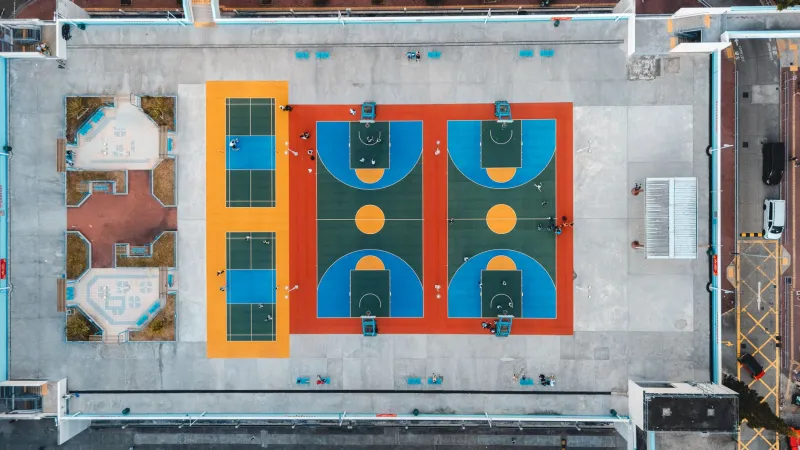
The stereotype of junior development involves sprawling facilities, indoor bubbles, and endless court time. Hong Kong has none of that. What it has instead is density — of coaching talent, of competition, of kids hungry for court time in a city where booking a slot is a competitive sport in itself.
The local junior scene runs on a relentless tournament calendar. Weekends are stacked with age-group events, and because everything is close by, a twelve-year-old can play three tournaments in a day-trip radius. In the US, a talented junior in a smaller state might drive four hours to find real competition. In Hong Kong, the competition is on the next court over, every weekend, all year.
That constant, local, high-repetition match play builds something academies can't buy: match toughness. These kids don't get rattled in tight sets because they've played hundreds of them against the same rivals they've known since they were nine.
The School-Balance Gamble
Here's where I'll plant a flag: Hong Kong's insistence that juniors stay academically grounded, rather than abandoning school for full-time tennis at fourteen, gets dismissed too easily by American tennis culture. Yes, it limits training hours. But it also produces players who can think, adapt, and build a life beyond tennis — and it means families aren't financially crushed by a development dream.
The trade-off shows up in the results. Hong Kong won't produce a top-five player through this model alone. But it produces a steady stream of solid professionals, college-bound players, and Davis Cup stalwarts who compete with intelligence and composure. For a tennis nation of this size, that's not failure — that's a strategy.
The Collegiate Bridge — Yes, the American One
Here's the twist many US fans don't realize: Hong Kong's pipeline leans heavily on the American college system. The territory's top juniors routinely earn spots on NCAA rosters, using American scholarships as their development finishing school before returning to represent Hong Kong in Davis Cup ties.
It's a genuinely clever bit of arbitrage. Hong Kong develops the fundamentals and the fight; American colleges provide the facilities, strength training, and daily high-level competition that the territory simply can't host. The players come back stronger, more physical, and match-ready for zonal Davis Cup ties. If US college tennis wants to feel important, look no further than how many Davis Cup points around Asia have been won by NCAA-trained players.
Can Small Markets Actually Compete? My Honest Answer
Not for the Davis Cup trophy — not soon, and probably not ever, against the likes of Italy, Australia, or the US. The depth required to win a full World Group campaign is a population-and-investment problem no clever coaching can fully solve.
But that was never the right measuring stick. The right question is whether Hong Kong can be competitive at its level, produce players its kids can look up to, and win ties it shouldn't. On those terms? Absolutely, and increasingly so. Watching a home tie, with a packed crowd roaring behind a player who trained on the same public courts as the fans in the stands, is as pure as this sport gets.
What US Tennis Should Steal
Three things, in my view:
- Dense local competition beats sparse elite training. More weekends of real matches, fewer months of drilling in isolation.
- Keep kids in school. The players who arrive at college and pro tennis with their heads on straight last longer.
- Use the college system shamelessly. It's the best development infrastructure in the world, and small nations have figured that out faster than American juniors have.
Hong Kong tennis will always be an underdog. But underdogs with a system — a real, repeatable, resourceful system — are a lot more dangerous than their square footage suggests. Keep an eye on the next generation coming out of this pipeline. The serves are only getting bigger.