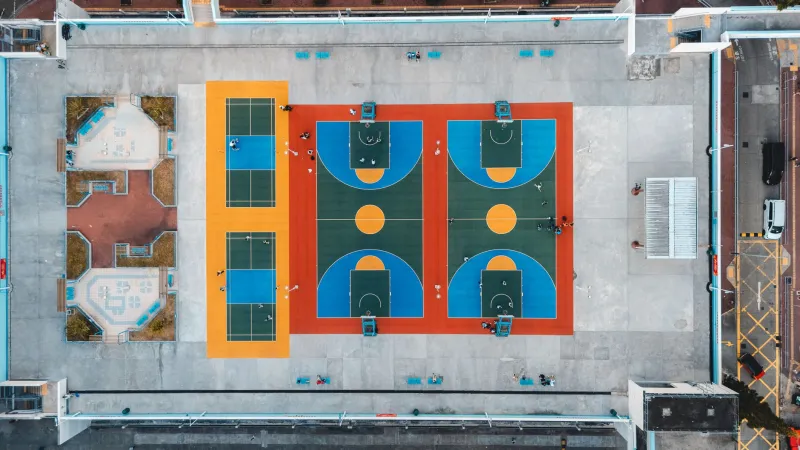
Chasing Shag Balls in Victoria Park: My Weekend as a Davis Cup Ball Kid Hopeful
Photo: , Public domain, via Wikimedia Commons
There's a moment during every Davis Cup tie that most broadcast viewers never notice: the split-second choreography of a ball kid sprinting to collect a ball that's rolled to the back fence, rolling it along the ground with two hands, and sliding back into position — all before the server bounces the next ball twice. Do it right, and nobody remembers you. Do it wrong, and 2,000 people in Victoria Park suddenly become very aware you exist.
I spent a recent Saturday morning learning exactly how aware that feels.
The Tryout Nobody Warns You About
Hong Kong's ball kid selection isn't a formality. For ties played at the territory's usual venues — think Victoria Park's show courts or the hard courts at sports institutes around town — organizers run trial sessions weeks in advance. Kids (and yes, some adults for volunteer roles) are put through drills that look simple until you try them: rolling passes, the two-bounce recovery, positioning during changeovers, and the unglamorous art of standing still for an entire game without fidgeting.
What surprised me most was the emphasis on composure. A coach running the session kept repeating a phrase that translates roughly to "the tie does not wait for you." In Davis Cup play, where the rhythm of a crowd-fed home team matters, a slow ball rotation can genuinely throw off a server's cadence. The best ball kids here aren't the fastest — they're the most consistent.
More Than a Tennis Job
Here's the thing that separates this from your typical US tournament volunteer gig: in Hong Kong, ball kids and general volunteers often come from the same talent pipeline that feeds the territory's playing ranks. Local coaches use the trial sessions as talent scouting in disguise. Several current junior players in the regional circuit first picked up a racquet seriously after spending a tie shagging balls at the baseline, close enough to feel the pace of a Davis Cup serve.
It's a clever bit of ecosystem design. The sidelines become a classroom. A twelve-year-old rolling balls to a visiting national-team player on Saturday might be in a development squad by summer.
How a Visiting American Fan Can Get Involved
If you're traveling from the States for a tie — maybe you've already planned your trip around the time zone math and the MTR schedules — there are realistic ways to get closer than a general-admission ticket.
- Volunteer registration: Organizers typically open volunteer sign-ups through the national federation's website and partner clubs a month or two before a home tie. Roles range from court crew to hospitality and media support. English is widely spoken, so don't let the language question scare you off.
- Ball kid trials: Officially for younger participants, but adult volunteer courtside roles (line-crew support, player escorts) sometimes open to visitors with tennis backgrounds. Showing up to a local club and asking goes further than you'd think.
- Community tie-ins: Around major ties, local clubs often host open sessions or watch events where federation staff are present. That's where the real networking happens — and where I learned that a friendly "I'm here from Chicago, how can I help?" gets you handed a lanyard surprisingly fast.
What the Sidelines Reveal About the Game Here
Standing courtside, even briefly, reframes how you see Hong Kong tennis. The volunteer crews skew young, multilingual, and intensely proud of the flag on their polos. The coaches running drills correct technique with the same vocabulary they'd use in a private lesson. And the players notice — more than one Davis Cup team member has made a point of flipping a used grip or a spare overgrip to the kids working their matches.
For US fans used to the big-production feel of a US Open or an Indian Wells, the scale here is humbler but more intimate. You're close enough to hear the coaching between sets. The ball kids aren't background scenery; they're part of the show, and the crowd knows their names by day three.
The Takeaway
If your Davis Cup fandom has plateaued at "watching from a laptop at odd hours," consider this your nudge. The next time Hong Kong hosts a tie, don't just buy a ticket — ask about volunteering. Worst case, you spend a weekend outdoors at a world-class event with a great view. Best case, you end up on the court apron, two feet from a deciding rubber, learning that the smoothest-running tie in tennis is powered by a rotation of teenagers who never miss a roll.
And if you see someone fumbling their first rolling pass near the umpire's chair? Be kind. That was probably me.