Ninety Minutes, No Waste: A Hong Kong Practice Blueprint American Coaches Should Steal
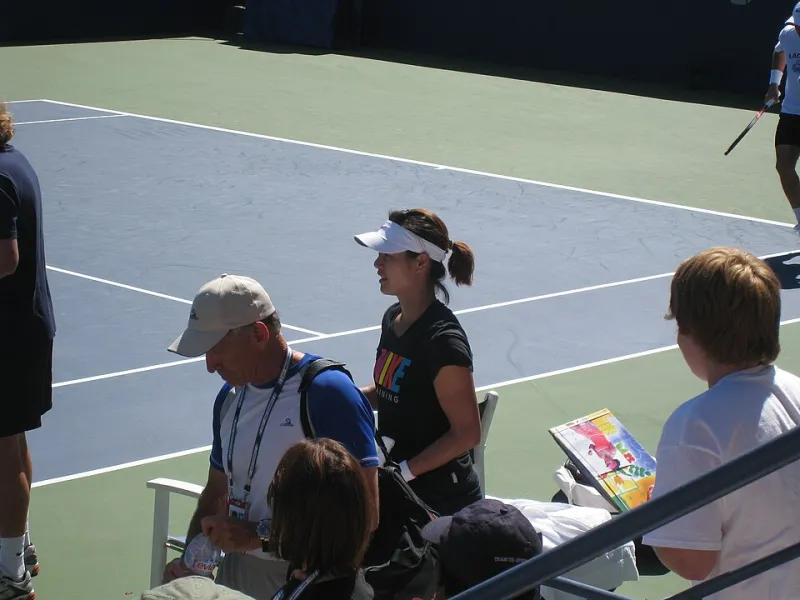
Photo: JC, CC BY-SA 2.0, via Wikimedia Commons
A Hong Kong Davis Cup practice does not begin with a long, slow warm-up and a casual chat. It begins with a plan that has already been trimmed. The court time is limited. The air is heavy. The players have matches coming. So the session is built like a short flight: every part has a purpose, and nothing boards unless it has a seat.
That is not the way most American college practices are remembered. College tennis often celebrates the grind — the 2.5-hour session, the extra serving sets, the conditioning block at the end. There is value in that. But Hong Kong's 90-minute model asks a useful question: if you had to cut your practice in half, what would you keep?
Why the Clock Starts Early
Hong Kong's summer humidity changes the math of practice. A long session can turn into a survival test. Players sweat through shirts, lose grip, and slow down before the work is done. The captain and coach know that the last 30 minutes of a three-hour practice are often the least useful. So they build a shorter session that keeps the quality high from the first ball to the last.
Court time is another factor. Public courts and private clubs are busy. Davis Cup practice windows are not infinite. The team may get the court for a set block, then have to clear out for the next booking. That forces discipline. The players do not warm up by accident. They do not drift into a hitting session. They arrive with a sequence.
The 90-Minute Skeleton
The sessions I watched followed a similar shape. The first 10 minutes are for arrival and movement: dynamic warm-up, band work, a few short sprints, and a check-in on how the body feels. No one is hitting winners yet. The goal is to raise the temperature and find out what the day will allow.
The next 15 minutes are for purposeful hitting. Not baseline rallying for the sake of it. The players work on one pattern — cross-court forehands, backhand returns, serve plus first ball. The coach gives a target, not a lecture. If the pattern is not working, the feedback is short and specific. The clock keeps everyone honest.
The middle 20 minutes are the tactical block. This is where the opponent's likely patterns get rehearsed. If the tie may feature a lefty server, the returner practices the wide return. If doubles is likely to decide the tie, the team works on the middle poach and the return position. The intensity rises, but the structure stays clear.
Then comes 15 minutes of pressure work. This is not conditioning. It is score-based tennis with consequences. A server starts at 30-30. A returner has to win two points in a row. A doubles team plays a no-ad game. The goal is to make the practice feel like the tie, not like a lesson.
The final 10 to 15 minutes are for the specialty and the cooldown. A few serves. A few returns. A review of the one cue the player wants to keep. Then the session ends. No extra hitting for the sake of looking tough. The work is done.
What Gets Cut
What is missing is as instructive as what is included. There is no long line of mindless feeding. There is no 45-minute baseline rally that turns into a fitness test. There is no extra session after the session because someone feels guilty. The Hong Kong model cuts the parts of practice that look productive but do not change the player's readiness.
That is a useful lesson for American junior coaches. Many young players equate length with commitment. Parents sometimes do too. But a 90-minute session with clear targets can be more demanding than a three-hour session with no shape. The player has to concentrate. The coach has to plan. The clock does not allow hiding.
Recovery Is Part of the Plan
Hong Kong's practice week also treats recovery as part of the work. The players hydrate with more intention than American juniors often do. They change shirts. They use the shade. They keep the cooldown short but real. The captain knows that a tired player on Friday is not helped by a heroic session on Thursday.
American college coaches already understand this, but the schedule does not always reflect it. A dual-match weekend can make every practice feel like a chance to cram. Hong Kong's model is a reminder that the best practice is the one a player can recover from. Intensity and length are not the same thing.
What US Coaches Can Borrow
You do not need Hong Kong's humidity to use the 90-minute idea. You need a plan. Pick one pattern for the day. Put the pressure work in the middle, when the player is fresh enough to compete but tired enough to be honest. End with a cue, not a rant. Keep the last 10 minutes as a review, not a punishment.
For American junior coaches, the biggest takeaway is the block structure. For college coaches, it is the permission to cut. A shorter session can still be hard. It can still be competitive. It can still build the team. In fact, it may build a team that is fresher on match day — and more able to remember the plan when the score gets tight.
The 90-minute rule is not magic. It is just a decision to respect the clock, the body, and the next match. Hong Kong's Davis Cup practices are not shorter because the team cares less. They are shorter because the team knows exactly what it needs.