The Guy in the Warm-Up Jacket: What a Davis Cup Reserve Actually Does for Three Days
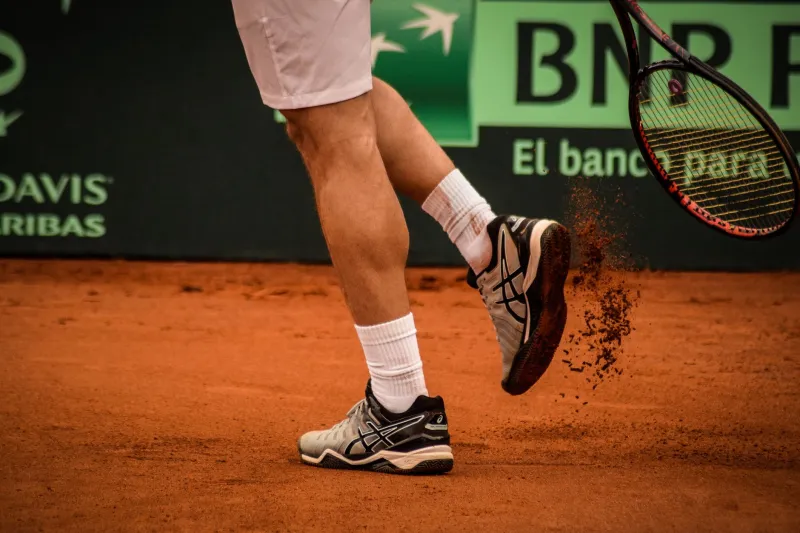
The first thing you notice about the fifth man on Hong Kong's Davis Cup roster is that he never stops moving. He is not on court for the opening serve. He is not the one the television camera finds after a break point. But from the moment the team walks into the venue, he is working. He carries the warm-up jacket with the same seriousness a starter carries a racquet. He hits the extra balls. He watches the opponent's second serve like a scout who forgot his notebook. He is one injury, one twisted ankle, one bad warm-up away from being the story. Until then, his job is to make sure the story does not need him.
That sounds like a small role. In Davis Cup, it is not. The reserve player — often called the fifth man on a four-player roster — is part player, part coach, part older brother, part insurance policy. For American college players who spend most of the year fighting for a lineup spot, and for tennis parents who measure progress in wins, the role is a useful reminder that teams are built in places the scoreboard does not always show.
The Warm-Up That Counts Twice
On a practice morning in Hong Kong, the reserve is usually the first one on court and the last one to leave the hitting line. That is not a punishment. It is a design. The starter needs a live arm before the real work begins, and the reserve needs to be ready without warning. A reserve who has not hit enough balls is not really a reserve. He is a spectator in a team shirt.
So the warm-up becomes a rehearsal for an emergency. The reserve mimics the opponent's patterns. If Hong Kong is facing a lefty with a heavy forehand, the reserve feeds heavy forehands. If the tie may come down to a doubles rubber, he practices the return position he might be asked to play at 9 p.m. on Sunday. The work is specific, repetitive, and mostly invisible. It is also the difference between a team that has four players and a team that has five.
American college players know this feeling, even if they do not call it by the same name. The guy who does not crack the singles lineup still has to be ready for a Sunday dual match in March. The difference in Davis Cup is the compression. There is no next weekend. The tie ends in three days, and the reserve's readiness has to be real by Friday.
Bench Duty Is a Job
During the tie, the reserve's seat is not a rest stop. It is a command post with a bad view. He tracks the opponent's patterns. He keeps the team book. He notices when a server is landing 70 percent of first serves in the ad court but fading in the deuce court. He is the one who can remind the captain that the opponent has hit three straight backhand returns down the line — a detail that may become a timeout instruction ten minutes later.
In Hong Kong, where the captain often works with a small staff, the reserve's eyes matter. There is no sprawling analytics team on the bench. There is a player who knows the game plan and can spot when it is drifting. That is a real responsibility, and it changes how the reserve watches tennis. He is not watching as a fan. He is watching as a person who may have to solve the problem himself.
This is where American tennis parents can learn something. The reserve role teaches a player to compete without the reward of competition. It teaches attention. It teaches the habit of staying warm, staying curious, and staying useful. Those are not soft skills. They are the skills that keep a college player in the lineup when the season gets long.
Signals, Not Cheers
From the bench, the reserve communicates in small ways. A tap on the racquet. A hand flat against the thigh. A nod toward the ad court. In a noisy tie, the captain cannot always shout a full sentence, and the player cannot always look over. The reserve becomes a second set of signals — a living reminder of the plan.
It can look cryptic from the stands. It is not. Most of it is simple: slow down, change the return position, take the extra step, trust the second serve. The reserve is not calling plays like a football coordinator. He is helping the player remember what the team already decided. That is a subtle skill, and it takes a certain personality. The fifth man has to be honest enough to say the useful thing and humble enough to say it in six words.
The Emotional Ledger
The strange part of the job is the waiting. A reserve can warm up for 45 minutes, sit for three hours, and never hit a competitive ball. He can prepare for a match that never happens. He can watch a teammate win a five-setter and feel both thrilled and completely useless. That emotional ledger is the part no one trains.
Hong Kong's reserve players seem to handle it by staying busy. They shag balls. They talk to the stringer. They hit with the junior who is not on the roster. They keep the team loose. In a small team, that matters. A reserve who sulks becomes a weight. A reserve who stays engaged becomes a second coach.
For a young American player who is used to being the main event, that is a hard lesson. But it is a valuable one. College tennis is full of players who are one injury away from the lineup. The ones who stay ready usually get their chance. The ones who check out usually do not.
What American Families Can Borrow
The reserve role is not glamorous. It is not supposed to be. But it teaches three things that travel well: preparation without guarantee, attention without applause, and team value without a scoreline. If you are a junior player, practice your warm-up like it is a match. If you are a parent, watch how your kid behaves when he is not the one playing. That is where the team is built.
On the final day in Hong Kong, the fifth man may still be in the warm-up jacket. He may never step on court. But when the tie ends, he is not a bystander. He is part of the result. The scorecard will not say so. The team will.