Twenty-Four Frames and a Hygrometer: A Week Inside a Hong Kong Davis Cup Stringing Room

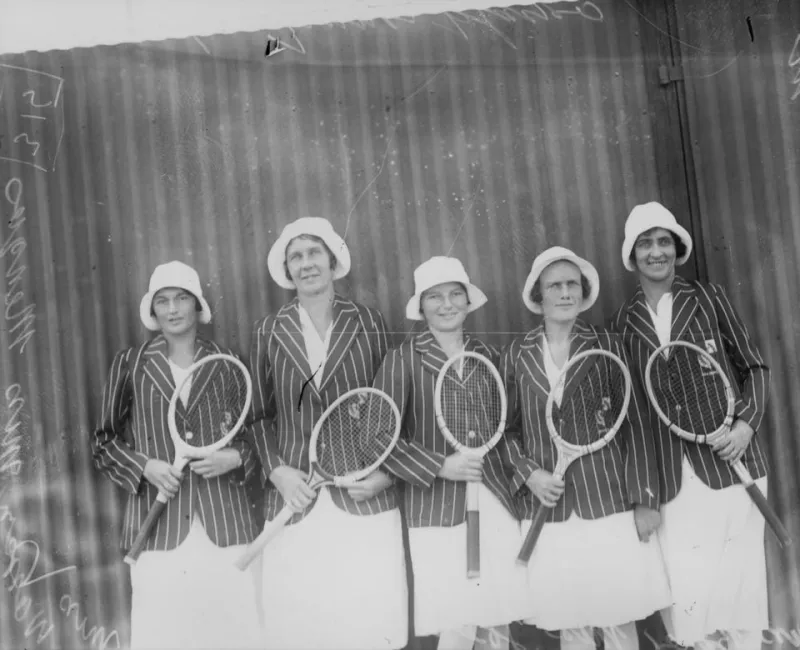
Photo: Mattinbgn (talk · contribs), CC BY 3.0, via Wikimedia Commons
The stadium is loud. The stringing room is not. It's a converted storage space with two machines, a rolling cart of reels, a laptop logging every job, and a wall thermometer that gets checked more often than the scoreboard updates.
During a home tie in Hong Kong, this room runs on a schedule that nobody sees. Players drop frames off at odd hours. Deadlines arrive disguised as "can I get this before the doubles?" The crew's job is to make sure that when a player reaches into his bag, the racquet feels exactly like the one he won with — and not one gram off.
The Room Behind the Baseline
A tie week starts with an inventory that looks more like a small pro shop than a workshop: reels of polyester, a couple of natural gut sets for the players who still swear by it, hybrids for the ones who don't, overgrips in bulk, replacement grips in three thicknesses, lead tape, silicone, and a shoebox of butt caps and grommets for emergencies.
The crew also collects the details most fans never think about. Each player's grip size, favored overgrip, wrap direction, dampener brand, and preferred tension — plus a second-favorite tension, because everything changes when the air gets thick.
Humidity Is the Real Opponent
Here's the thing about stringing in Hong Kong: the weather is a co-author of the spec sheet. Summer humidity does two things at once. It softens the response of a stringbed over the course of a match, and it turns a grip into a wet sponge faster than any opponent can.
The practical result is that tension numbers get treated as a range, not a commandment. A player who likes 52 pounds in a dry, air-conditioned practice hall may get 52 or 53 for a humid outdoor session, because the string will lose tension and elasticity in the heat anyway. The crew isn't guessing — they're pre-compensating for physics.
Grips get the same attention. Overgrips get changed at changeovers in extreme cases. Some players go through three or four in a match. Towels appear at every chair, and rosin or grip lotion sits in the bag, not because anyone enjoys the ritual but because a slipping racquet in a tiebreak is a genuine tactical disaster.
Choosing a Number
Tension choice is where equipment nerds reveal their personalities. The low-tension crowd wants free power and a bigger sweet spot; they accept a livelier, less predictable stringbed. The high-tension crowd wants control and a lower launch angle, and they're willing to work harder for depth.
The crew's role isn't to argue philosophy. It's to reproduce the number the player trusts, every single time, on machines that get calibrated before the tie starts. That calibration matters more than people realize. Two machines reading two pounds apart can turn a familiar frame into a stranger.
The Backup-Racquet Math
A touring player typically carries four to six matched frames. During a tie week, the crew has to figure out how many are strung, how many are reels-ready, and how many get restrung between sessions.
The real math is about how fast a stringbed dies. Polyester loses tension in a hurry, especially in heat. A frame strung Monday might be a different racquet by Wednesday. So the crew staggers jobs: fresh frames for match days, slightly older stringbeds for practice, and a rotation so nobody ends up holding a racquet that was strung six days ago and has been sitting in a humid bag ever since.
Add the doubles factor and it gets busier. Doubles players often want a slightly different setup — sometimes a touch more tension for volley control, sometimes a different string pattern. Multiply that by two players and a Saturday match that might run 90 minutes or three hours, and the room stops being quiet.
The 11 P.M. Handoff
Some of the best stories from a tie week happen after the stadium empties. A player loses a tight match, wants a fresh setup for Sunday, and shows up at the door at 11 p.m. with three frames and a specific request. The crew strings them, logs them, checks the tension, and hands them back before midnight.
There's quiet pressure in that exchange. Nobody's watching. There's no crowd, no highlight reel. But Sunday's match might hinge on a stringbed feeling exactly right, and the player knows it, and the crew knows it too.
What Club Players Can Actually Steal
You don't need two machines and a hygrometer to borrow from this. A few things translate directly to a recreational player in Ohio or Arizona:
Log your setups. Tension, string, date, hours played. Two minutes per job. After a season you'll know why some frames feel dead by week three.
Adjust for the day. Hot, humid outdoor session? Drop a pound or plan on a mid-match feel change. Cold, dry morning? Expect a firmer, boardier response.
Respect string death. Polyester isn't a forever investment. If a frame has been sitting in a hot car for a month, the number on the sticker is fiction.
Frame your grips. Two or three overgrips in the bag during summer play is cheap insurance against the slip that costs you a tiebreak.
Keep a matched pair. Even two frames set up identically can save a bad day — and it's the simplest version of what the pros do.
The Quiet Part
The equipment crew doesn't get a walk-on introduction. Their work shows up as a player's calm face at 0-30 in the third set, reaching for a frame he trusts completely.
That's the whole job, really. Make the tool invisible so the tennis can be loud.