Midnight Leagues and Shared Nets: What Hong Kong's Court Crunch Could Fix in America
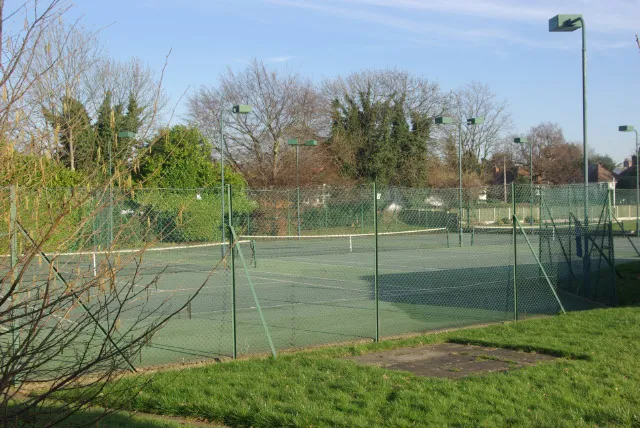
Photo: Stephen McKay, CC BY-SA 2.0, via Wikimedia Commons
There's a running joke among Hong Kong tennis players that you don't book a court — you win one. The Leisure and Cultural Services Department opens its booking windows in waves, and regulars set alarms, refresh screens, and pounce like it's a Taylor Swift presale. Miss the window, and your next realistic slot might be three weeks out, under floodlights, at 11 p.m.
And yet: the game keeps growing. Junior programs have waiting lists measured in years. Adult leagues run at hours that would make a rec director in Ohio faint. If American clubs staring down post-COVID waitlists want a preview of their own future — and a playbook for surviving it — Hong Kong has already written it.
Scarcity as a Feature, Not a Bug
Let's put numbers on it. Hong Kong has around 7.5 million people crammed into a territory smaller than Los Angeles, with a public court supply that would embarrass most mid-sized American suburbs. Land is so expensive that a tennis court occupies real estate worth more than the entire annual budget of a typical US parks department.
The result is a system where every hour of court time is precious, so nobody wastes it. Sessions start on the dot. Warm-ups happen off-court. Drills are designed for twelve players on one surface, not four. It sounds grim, but players here describe the opposite: because court time is rationed, the community around it — the group chats, the sub lists, the shared coaching costs — is denser than anything you'll find at a country club with empty prime-time slots.
The Midnight League Phenomenon
Hong Kong's floodlit courts run until 11 p.m. or later, and the tennis economy has adapted. Competitive evening leagues fill the late slots, drawing the office crowd — bankers, engineers, nurses — who treat a 9:40 p.m. singles match the way Americans treat a Sunday morning round robin.
The lesson for US park districts isn't "keep the lights on later" (though honestly, do that too). It's that demand doesn't vanish when you run out of convenient hours. It reorganizes. Clubs that treat 8–10 p.m. as dead time are sitting on inventory their waitlist would kill for. A singles league at 9 p.m. costs almost nothing to run and can absorb dozens of players who'd otherwise be on a freeze list.
Shared-Court Cooperatives: The Group Chat Economy
The most transferable idea from Hong Kong is almost embarrassingly low-tech. Because individual bookings are hard to land, players form rotating cooperatives: one member books the court, eight to twelve players split the cost and the time, and a shared chat handles subs, cancellations, and level-matching.
American clubs could formalize this overnight. Instead of a waitlist where members rot until a prime slot opens, create co-op tiers — book a block, bring a group, split the fee. The club fills off-peak hours, players get guaranteed tennis, and the waitlist becomes a pipeline instead of a graveyard. A few US facilities have experimented with this; almost none have made it the default.
Coaching Without the Court Hogging
Hong Kong's teaching pros have mastered the art of the crowded court. Group sessions of six to eight students on a single surface are the norm, with feeding drills, rotational point play, and fitness stations on the sidelines. The economics work: students pay a fraction of private-lesson rates, coaches earn more per hour, and the club sells one court to eight customers instead of two.
Contrast that with the American model — one pro, one student, one court, one eye-watering invoice — and it's easy to see why junior programs everywhere have waitlists. Group-first programming isn't a compromise. In Hong Kong, it's the engine of the whole tennis pipeline, and it feeds directly into the region's Davis Cup hopes. Small island, packed courts, kids who've been playing rotational point drills since they were seven.
What US Clubs Should Steal
A short list for any rec director or club manager reading this:
- Price time, not courts. Off-peak and late-night slots should be cheap enough to fill, not held at full rate for nobody.
- Build the co-op booking tier. Let groups reserve blocks and self-organize. Your software probably already supports it.
- Default to group programming. Six kids and a hopper beats a waitlist of sixty and an empty court at 3 p.m.
- Treat floodlights as infrastructure. Lighting upgrades are the cheapest capacity expansion most American facilities will ever get.
- Ration on purpose. Scarcity, managed well, builds community. Abundance, managed badly, builds empty time slots.
The Takeaway
Hong Kong tennis players would trade a lot for an empty Sunday morning court and a suburban parking lot. American players would trade a lot for Hong Kong's urgency, its packed group chats, its sense that every hour on court matters. Somewhere between those two complaints is a better way to run a tennis facility — and it's already been beta-tested, at midnight, on an island with no room to spare.