The Twenty-Minute Rule: What a Hong Kong Recovery Room Taught Me About Playing Tired
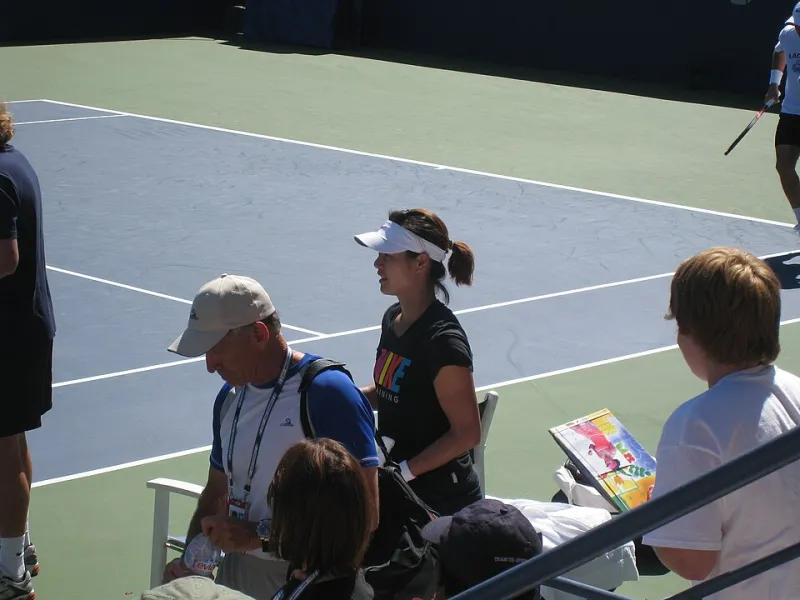
Photo: Peter Menzel, CC BY-SA 2.0, via Wikimedia Commons
The room is not a room. It is a stretch of service corridor behind the baseline seating, wide enough for a folding table, two coolers, a stack of towels, and one physio who has done the math on how many minutes she actually has. When a player walks off court after a four-set loss on a Friday, the clock starts. Twenty minutes. Then warm-up, then the doubles conversation, then bed.
I spent two days in that corridor at a Hong Kong home tie, mostly standing out of the way, and what stayed with me was not the equipment. It was the script. Nobody in that corridor was improvising. Every minute had a job, and the job had been decided weeks earlier, in a hotel breakfast conversation that nobody would ever put in a press release.
The Room Is a Compromise, and Everyone Knows It
Hong Kong does not have a dedicated recovery suite at most of the venues it uses. What it has is proximity. The corridor is roughly forty steps from the court gate, which matters more than square footage. A player who has to walk four minutes through a concourse, up an elevator, and down a hall arrives at the table already tight. Forty steps and he arrives still breathing hard, which is exactly when you want hands on a calf.
The kit list is short. Two hard coolers. A case of zip-top bags. A stack of hand towels that get soaked, wrung, and frozen at the hotel the night before. A foam roller, a massage gun with two spare batteries, a scale, and a laminated card with the twenty-minute breakdown printed on it in type big enough to read from a chair.
No ice bath. That is the first thing American coaches ask about. There is no plunge tub in a service corridor, and there is no time to get a player into one and back out again without wrecking the warm-up window. Hong Kong improvises with what fits in a cooler.
The Twenty-Minute Card, Minute by Minute
Here is roughly what the card says. It is not proprietary. It is just disciplined.
- Minutes 0 to 3: cool down, not sit down. Legs up on a chair, cold towel on the neck, cold towel on the back of the knees. Water first, always water first, and the physio watches how much gets drunk.
- Minutes 3 to 8: hands on the legs. Calves, hamstrings, hip flexors. One side, then the other, and a short check on whatever the player is quietly favoring. This is where small problems get named out loud.
- Minutes 8 to 14: the specific complaint. Shoulder, lower back, elbow, whatever the player actually felt in the third set. This block is protected. Nobody talks tactics during it.
- Minutes 14 to 18: fuel and feet. A banana, a rice ball, something with salt. Fresh socks. Blisters taped before they become a Sunday problem.
- Minutes 18 to 20: reset. The physio asks two questions: what hurt, and what do you need tonight. The answers go in a notebook, not a phone.
Twenty minutes sounds generous until you watch it happen. It is not generous. Players come off court late, a captain wants thirty seconds, a doping control officer wants five minutes, and by the time the door closes you are down to fifteen.
What Actually Travels to a US Club
The staff depth does not travel. Hong Kong runs this with one physio and a team manager who has learned where the ice machine is in every hotel in the city. Your club is not going to hire that person for a Tuesday night league match.
But four things do travel, and they cost almost nothing.
Pre-chill the towels before you leave the house. Wet four hand towels, wring them, bag them, freeze them. A cold towel on the neck between sets changes how the next ten minutes feel. This is the single cheapest recovery habit in tennis.
Write the script down. Most recreational players between sets do whatever occurs to them, which usually means sitting, scrolling, and getting stiff. A written twenty-minute card removes the decision. Even a four-line version on an index card beats vibes.
Protect one block from tactical talk. If you play doubles, your partner wants to discuss the return formation the second the set ends. Give the body fourteen minutes first. The tactics will still be there, and you will hear them better.
Ask the two questions. What hurt, and what do you need later. Write the answers down. Over a season, that notebook tells you more about your body than any wearable.
The Part Nobody Copies
The corridor operation is not really about recovery. It is about attention. Twenty minutes of undivided attention from one person who is not your opponent, not your captain, not your doubles partner, and not your own anxious brain.
American club tennis is full of people who spend money on recovery and none on attention. The gun, the roller, the compression sleeves, the cold plunge in the garage. All useful. None of it asks you what hurts.
Hong Kong's advantage is not equipment. It is a laminated card and a person who reads it out loud. Steal that.