Grainy Tape, Giant Hearts: The Hong Kong Davis Cup Moments Worth Digging Up
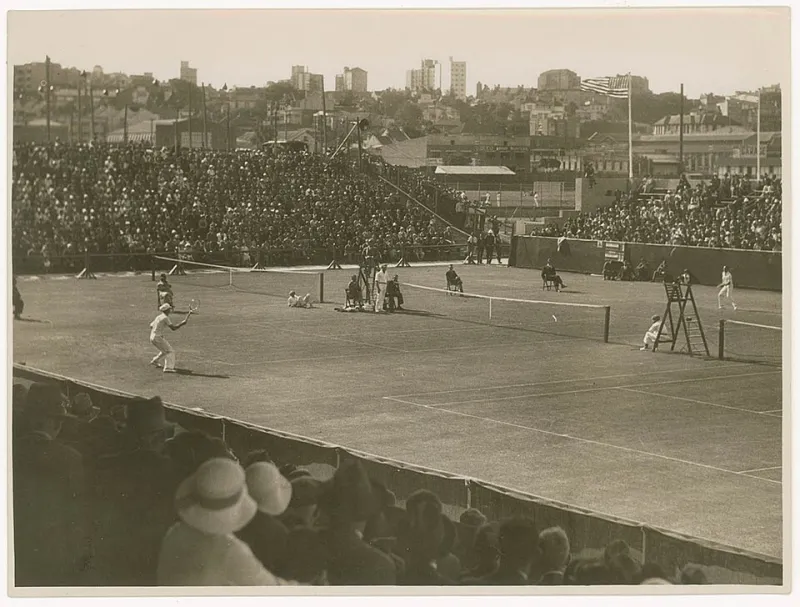
Photo: State Library of New South Wales collection, No restrictions, via Wikimedia Commons
There's a particular kind of sports nostalgia that hits different when it comes from a place nobody expects to win anything. American fans know this feeling — we root for the 1980 Miracle on Ice, for Butler's halfcourt heave, for any 16-seed that stays alive past Thursday. It's the underdog gene, and if you've got it, Hong Kong's Davis Cup archive is a gold mine you've probably never opened.
We spent the last few weeks doing exactly that: pulling old footage, scanning newspaper clippings from the South China Morning Post's sports pages, and calling fans who were actually in the stands when this tiny tennis nation had its moments. What we found is a reminder that Davis Cup history isn't just written by the Aussies and the Spaniards.
The Tie Everyone Still Talks About
Ask any longtime Hong Kong tennis follower about their favorite memory and you'll hear the same story told with slightly different details — a zone tie in the 1980s or '90s where the underdog flag refused to go down. Hong Kong, with a population smaller than the Dallas-Fort Worth metroplex and roughly zero public tennis infrastructure by American standards, kept dragging bigger nations into dead rubbers and fourth sets.
The archival footage is charmingly rough. Broadcast cameras from the era frame the Victoria Park courts with the harbor glinting in the background, and the crowd noise is unmistakably intimate — you can hear individual fans yelling in Cantonese, the way you can hear a single voice at a minor league ballpark in Omaha. There's no rock concert production. Just tennis, flags, and stakes.
One retired fan we spoke to, who asked to be identified only as Mr. Chow, attended ties at Victoria Park for three decades. "People forget how loud it got," he told us over the phone. "Small stands, close to the court. When Hong Kong won a set they weren't supposed to win, the whole place shook."
Why the Archive Matters Now
Here's the thing about Davis Cup history: the new format has made the old zone ties feel like artifacts from another civilization. Week-long ties on home clay (or in Hong Kong's case, hard courts sweating through subtropical humidity) have been replaced by single-weekend events and neutral-site finals. For younger fans — especially American ones raised on best-of-three everything — the old footage can feel almost alien.
But that's exactly why it's worth watching. The archive shows what Davis Cup used to be at its most human scale: a visiting team flying in, a home crowd that knows every player by nickname, and a doubles rubber that decides everything because nobody's roster is deep enough for it not to.
If you want a crash course, here's what to look for in the vault:
- The doubles rubbers. Hong Kong's historical strategy leaned heavily on doubles specialists — a blueprint the current program still echoes. The old ties are full of crafty net play that's vanished from modern singles.
- The crowd shots. Notice how close the fans are. This is tennis as a neighborhood event, not a stadium spectacle.
- The weather. Humidity haze, sudden downpours, courts being squeegeed by volunteers. It's Davis Cup as survival show.
Punching Above the Population
For context: Hong Kong has never come close to the Davis Cup elite, and nobody pretends otherwise. But the head-to-head record against regional peers is far more competitive than a territory of its size has any right to claim. Tennis in Hong Kong developed without the academy pipelines of Florida or Spain — it grew through public courts, club leagues, and families squeezing practice sessions into a city where space is the scarcest resource.
That scarcity is baked into the archive. In the old clippings, match reports spend as much time on scheduling chaos and travel logistics as on the tennis itself. There's something deeply relatable about that for anyone who's ever driven two hours for a USTA sectional match or paid $60 an hour for court time in New York.
Where to Start Your Deep Dive
You don't need access to a broadcast archive to fall down this rabbit hole. Newspaper databases, old ITF result pages, and the occasional YouTube upload from a fan with a functioning VCR will get you surprisingly far. Start with any home tie from Victoria Park, then follow the thread forward — you'll watch the program evolve from expat-led rosters to the more homegrown pipeline the current team represents.
And if you're an American fan wondering why any of this should matter to you: because every sport needs its small-flag stories. The Miracle on Ice mattered because of who won, but also because of what it said about the sport itself. Hong Kong's Davis Cup history says the same thing about tennis — that the format still leaves room for places with no business competing to compete anyway.
The tape is grainy. The shorts are very short. The tennis, though, holds up. And in an era when Davis Cup sometimes feels like it's auditioning to become the ATP's version of the NBA in-season tournament, there's real comfort in knowing the scrappy old version is still sitting on a shelf somewhere, waiting to be rewatched.