No Cantonese? No Problem: An American Fan's Field Guide to Hong Kong's Tennis Media

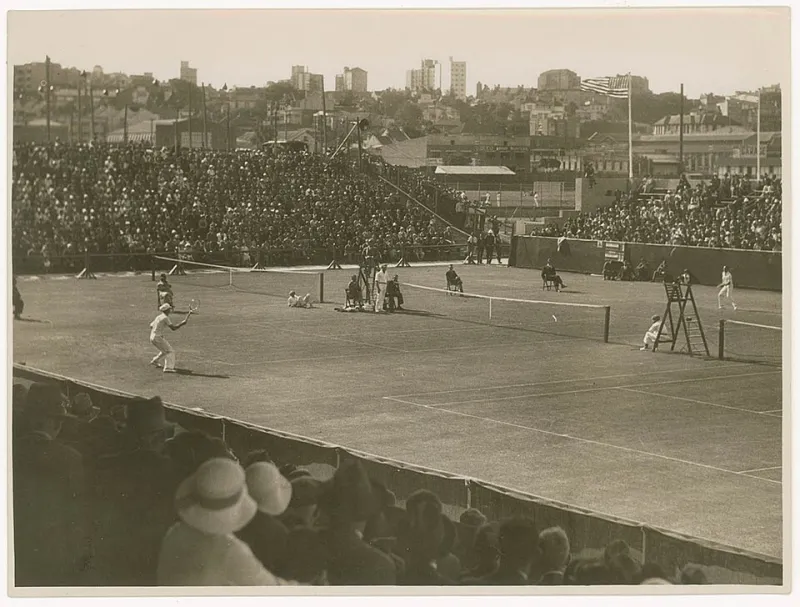
Photo: Dennis Sylvester Hurd, Public domain, via Wikimedia Commons
Here's the thing nobody tells you when you adopt Hong Kong as your second Davis Cup team: the good stuff isn't in English. The post-match quotes, the roster drama, the heated radio call-ins after a heartbreaking doubles loss — most of it happens in Cantonese, on platforms that never bother with a translate button.
For a while, I treated this as a wall. Then I realized it's more like a door with a weird handle. Once you know how to work it, you're inside a fandom most American tennis fans don't even know exists.
Start With Your Phone's Camera
The single most useful tool in my Hong Kong tennis toolkit is Google Lens. When a tie is live and I want local reaction, I pull up the sports section of outlets like Sing Tao or HK01 on my desktop, then run Lens over the headlines from my phone. Is it perfect? Absolutely not. Machine translation of Cantonese sports writing produces some glorious nonsense — I once read a translated headline that described a player as "firing noodles at the net." I knew it meant he was spraying errors. Close enough.
Pro move: screenshot the article first, then translate the screenshot. You keep the original for context, and the translation for meaning. Between the two, you can usually reconstruct what actually happened in the third set.
Instagram Is the Real Beat
Hong Kong tennis players are active on Instagram in a way that, frankly, a lot of mid-tier ATP and WTA pros aren't. They post training clips from Victoria Park, travel diaries from away ties in Islamabad or Colombo, and — my personal favorite — candid team-room photos during Davis Cup week that never show up anywhere else.
You don't need to read the captions to get value. A slow-motion serve from a Hong Kong singles player tells you more about his game than most scouting reports. And when you do want the captions, Instagram's built-in translation handles them fine. Comment something simple in English — most players reply, and it genuinely seems to make their week when an American fan shows up in the replies.
YouTube: Your Highlight Reel Pipeline
Search YouTube for the player's name plus the opponent's name, and you'll often find full matches or extended highlights uploaded by local channels and the Hong Kong Tennis Association itself. The commentary will be in Cantonese. Lean into it. There's something wonderful about watching a deciding tiebreak with announcers whose urgency is completely legible even when their words aren't. Raised voices are raised voices in any language.
Turn on auto-generated captions and let YouTube's translation run. The output is rough, but place names and scores come through clean, and that's usually all you need to follow the arc of a match.
A Pocket Glossary for Tie Day
A handful of Cantonese tennis terms will carry you surprisingly far:
- 網球 (móng kàuh) — tennis. Literally "net ball."
- 發球 (faat kàuh) — serve. If you see this in a headline, someone's discussing service games.
- 戴維斯盃 (daai wai sī būi) — Davis Cup. This one is phonetic, so it's easy to spot.
- 世界組 (sai gaai jóu) — World Group, as in the group stages of the new format.
- 主場 (jýh chèuhng) — home court/home tie. Crucial for knowing where a match is being played.
- 反手 (fáan sáu) — backhand. 正手 (jing sáu) is forehand.
Screenshot this list. On tie weekend, it turns a wall of headlines into something you can actually scan for the match report you're looking for.
Turn the Barrier Into the Hobby
Here's the mindset shift that made this fun instead of frustrating: treat the language gap as part of the fandom, the same way a baseball fan might learn Japanese box scores or a soccer fan might follow a club's Italian ultras on social media. You're not just consuming coverage — you're doing a little detective work every time.
Some habits that stuck for me:
- Follow the fan pages, not just the news. Hong Kong tennis fan groups on Facebook post lineup announcements and ticket info faster than any outlet. Facebook's translation is decent enough.
- Keep a running note of player names in Chinese characters. Once you can recognize 王康怡 or 黃澤林 at a glance, headlines stop being noise.
- Cross-reference with the ITF site. Results and draws are in English there. Use the Cantonese media for color and quotes; use the ITF for facts.
Why It's Worth the Effort
You could absolutely follow Hong Kong's Davis Cup campaign using only English sources and official score updates. But you'd miss the radio host who went on an eight-minute rant about doubles selection. You'd miss the local columnist who compared a teenage wildcard to a typhoon. You'd miss the texture.
And that texture is exactly why you picked a second team in the first place, isn't it? Anybody can root for the country on their passport. Following a team two time zones and one alphabet away takes actual commitment — and honestly, it makes every tie feel a little more earned.
So bookmark the sports pages, charge your phone before tie weekend, and get comfortable with the translate button. Your second team is talking about you. Well — about tennis. But you can read it now, more or less.